Here is the link to my Writing 2 Portfolio
http://mywrit2journey.weebly.com
Thursday, March 17, 2016

Thursday, March 10, 2016
Thlog Week 10
I can’t believe I’m writing the final thlog of the quarter. It’s crazy to think back to the first week of class. I went in thinking I was a pretty decent writer and I wouldn’t learn that much. Oh how I was wrong. I grew so much as a writer during these 10 weeks. I used to think of writing as a chore, but now I look at it as more of a game. How many times can I use dashes? What other ways can I write this sentence? How do I get more specific? This class challenged me to be creative and think critically. It made me realize that it’s okay to take risks in writing, because even if it doesn’t work out, it’s at least interesting and different.
The last day of class really ended things nicely. Going over how to make the portfolio helped clear up some of the unanswered questions I had. I’m a little concerned with the portfolio because it seems like a lot of work. I’m mostly unsure of how I am going to revise my WP2 without rewriting the entire thing. Most of the comments from Z were asking me to get more specific (surprising, I know), so I think I will be able to add in a good amount of detail to what I already have.
This class has honestly been one of the best I’ve taken at UCSB. I actually learned things. And not only that, I have already applied them in my personal life and in my other classes. The past 10 weeks have been tough, but well worth it. I am proud of how much I have accomplished with my writing. Thanks Z for such a great quarter!
Sunday, March 6, 2016
Thlog Week 9
I can’t believe we only have one more week of class left! I’ve learned so much this quarter, and I’ve really noticed a difference in my writing. I felt so accomplished after finishing WP3, now only the Portfolio is left! WP3 was a cool assignment. I consider myself to be a creative person, so it was nice getting to incorporate some of that into my writing with the genre transformations. I didn’t struggle too much with this WP. Once I had my ideas figured out, everything fell into place. The transformations came naturally, and it was pretty easy to use the information from the article in each of the other genres. The analysis portion of the paper took me a lot longer than I had anticipated. I used so many strategic moves in the genre transformation and I wanted to include as much of it as I could in my transformation. I kind of feel like I ran out of time at the end. I think if we had until Sunday night to turn it in, I would have felt less stressed. But I got it completed, and that is the important part.
When we did the peer review session on Wednesday, my group members and I did not have a lot of our WP’s completed. We spent a good amount of time just discussing our ideas and brainstorming with each other. It was really helpful to voice our concerns and work through them together. We also read over each others’ papers (what parts of it we had done) and gave feedback. I got some really great notes on mine that helped me when I was writing. Someone suggested I tweak parts of the formatting on my genre transformation for younger audiences to more closely follow the conventions of the work I was trying to create.
With all the WP’s completed, I feel ready to take on the final writing assignment. I know it’s going to be a lot of work, but I’m excited to show how much I have grown as a writer.
WP3: Genre Transformation to the Extreme
The article Freedom of Voice by Maura Stetson discusses different strategies for teaching voice. Voice in writing is powerful— it is what makes a work memorable. However, it is a hard concept to teach because “it is something that students must develop over time through discovering and gaining confidence in what they have to say (Stetson. 74).” Voice appears in a work when the writer has a certain freedom and flexibility. Students as early as 3rd grade begin to show a lack of voice in their writing, and the older they get, the more their voice is lost.
Stetson attributes lack of voice in writing largely to the concept of institutional voice. Institutional voice can be recognized by the bland word choice, robotic tone, and overall “stiffness” students often times use in their writing. Students are taught that writing is a series of steps, that if followed correctly, will earn them a good grade. This discourages risk taking and abstract thinking. According to Stetson, students can also learn to implement voice in writing through audience awareness. This creates a sense of communication, giving their writing purpose. Students so often lose their writing voice because they are not given a chance to make any individual choices or interpretations, causing them to fail at making connections to outside sources and their personal lives. When students use voice in their writing, they are able to implement critical thinking, self-expression, and produce engaging pieces of writing.
Genre For a Younger Audience: Online Article

The essay or personal statement is an essential component to most college applications. Though they may take a substantial amount of time and effort, they hold a lot of weight. Admissions officers look at your grades, letters of recommendation, and extracurricular activities—but it’s the essay that gives them a glimpse of who your are. It can be difficult to incorporate voice into your essay, especially since you probably weren't asked to do so in high school. Don’t stress, with our help, you’ll be sure to find your voice in no time!


The Basics
The format, complexity, and requirements of a college application vary depending on the university. Most will use the Common App, but others— such as the UC system and specific private schools— have their own separate application and essay prompts. Be sure to check what each college requires before you begin. Here are some links that you may find helpful during the application process.
- List of U.S Universities by State and Their Websites: http://university.graduateshotline.com/ubystate.html#.VtajM7RSQ20
- University of California (UC) Application Requirements: http://admission.universityofcalifornia.edu/how-to-apply/personal-statement/
Tell Your Story
What sets you apart from the rest?
You are unique. You have your own background, personality, and interests. The college application essay gives you the chance to tell your story. The best way to do that is to write a personal essay about an achievement or experience that is meaningful to you. If you are honest, engaging, and genuine, your voice will be sure to shine through.
Admissions officers have read an insane number of essays, most of which are easily forgettable. Many students try to sound intelligent and professional, rather than sounding like themselves. This is something we like to call the institutional voice— easily recognizable by its bland, robotic tone. You’ve been taught that the writing process is a series of steps, and the goal of writing is to get a good grade. But that’s not how voice works. Voice is discovered through individuality and confidence in what you have to say.
Let’s look at an example of what it means to write with an institutional voice vs. an authentic voice.
Institutional: The day I got my dog was amazing. I had wanted one for so long, and was finally able to get one. When I saw her at the pet store, I knew she was the dog for me. Having a dog taught me about responsibility. It is a lot of work to take care of a dog because they rely on you for everything. It was hard at first to keep up with all of the responsibility, but eventually I got the hang of it.
Authentic: The day I picked out my dog, Lulu, at the pet store was one of the most memorable and important days of my life. I had begged my parents for a dog for years before they finally felt I was ready to take on the responsibility. Lulu and I bonded immediately, and she became my best friend. I learned what it meant to care for someone other than myself. Lulu not only taught me about responsibility, but more importantly about unconditional love.
It is easy to see the differences between these two narratives. The institutional example is generic and bland— it could have come from anyone. The authentic example on the other hand, feels personal. The author uses specific details to provide readers with clear images and feelings.
Helpful Tips
Keep these in mind as you brainstorm and write your essay!
- Look at the Prompt! Be sure you understand what it’s asking of you. Most application essay prompts give guidelines for you to follow, but leave room for some interpretation and individual choice. Refer back to the prompt throughout the writing process to make sure you stay on track.
- Don’t simply tell a story— reflect. It is easy to recount the details of your volunteer work in Costa Rica or the time you won 1st place in the science fair. College admissions officers are looking for more. Discuss what you learned from the experience and how it shaped you into the person you are today.
- Know your audience! You are writing for a board of admission officers who read essays day in and day out. Establishing an audience gives your writing purpose. Writing without an audience in mind becomes institutional writing and lacks a sense of communication between the writer and the reader.
- Write about something important to you. It could be an experience, an achievement, a person, a place, anything. This is where have freedom and your voice can truly be heard. The more interested you are in a topic, the more it will reflect in your writing.


Genre For an Older Audience: Medical Brochure for Parents
 |
| Front Cover and Front Inside Panel |
 |
| Inside Panels |
 |
| Back Cover |
Alexandra Taleisnik
Writing 2
De Piero
3.5.16
Self-Analysis
“Good communicators “morph” themselves and their writing to fit different subjects or situations (Losh and Alexander. 117).” That is exactly what we were asked to do in WP3. In order to effectively transform the information found in the article Freedom of Voice, I had to think about my intended audience and the conventions that went along with each genre. I also put careful consideration into the way the information was presented, format, tone, language, and visual aids.
For my younger audience, I chose to write an online article directed at high school seniors who are in the process of applying for college. The purpose of the article is to show different ways students can incorporate voice into their college application essays or personal statements. The idea for this transformation came very naturally. Having struggled with my own college application essays, I know firsthand how difficult it can be to write using voice— especially with something so important on the line.
Through this article, I wanted to provide students with a “one-stop-shop” filled with helpful tips regarding the college application process, as well as specific ways they can implement voice into their writing. When writing the article, I decided to split the information up into multiple sections— The Basics, Tell Your Story, and Helpful Tips. This not only organized the information, but also made it easier for students to read through without getting bored. At the start of each section, I would begin by giving a brief introduction before going into more specific information. For example, in The Basics, I provided a general overview of the different types of applications before listing some related website links readers would find helpful. One move that I included multiple times when presenting information was the use of a bulleted list. This was partly used as an organization tactic, but it also fits in as a convention of the genre. In using bullets, I was able to get my point across in a clear and succinct way— something many students value. As far as actual information, I decided to focus on one main idea found in the Freedom of Voice article. Institutional vs. authentic voice stood out to me as one of the key concepts in understanding voice. In my article I made sure to explain what each term meant as well as provide examples. The examples I used were quite simple and somewhat exaggerated. I did this to clearly show the differences in tone, detail, and personality— three aspects that heavily influence the voice of a piece.
In planning how I wanted to approach the genre transformation, I struggled with which perspective to take— the college sophomore who recently went through the application process, or the college admissions expert. In the end, I chose to write as a Senior Publisher and Undergraduate Education Expert from The Princeton Review— an esteemed company that provides test prep, tutoring, and college admission services. In my opinion, establishing the right tone was crucial. According to Losh and Alexander, “your tone should engage your audience in a way that will invite them to feel receptive to your message (129).” I wanted to relate to my audience, but also build credibility at the same time. “Striking a forceful yet measured tone encourages your audience to take you seriously (Losh and Alexander. 129).” The tone I used was friendly, yet authoritative. It conveyed to the readers that I was on their side, and what I had to say was significant.
When it came to the visual aesthetic, I wanted the article to look as if it really belonged in the Princeton Review. To do this, I started by adding a website header and footer I took directly from the Princeton Review website. I also wanted to include a (fake) Youtube video, about the author, and a list of related articles— all of which are commonly found in publications of this sort— to give readers even more information regarding undergraduate education. While writing the article, I strategically bolded specific words or sentences to make them stand out from the otherwise consistent format. By framing certain ideas, “the reader is encouraged to focus on what does change” (McLoud. 20).” The bold type draws their attention and indicates that the information is significant. I also spent an embarrassing amount of time choosing the font I wanted to use. During my research, I noticed that most online articles use a Sans-Serif font, giving the page a sleek look and making it easier to read. It’s a small detail, but it makes a huge difference visually.
When writing towards an older audience, I chose to transform Freedom of Voice into a pamphlet for parents with young children titled, 10 Ways to Prevent Early Onset Voice Loss. The purpose of the pamphlet is to provide parents with different strategies in which they can encourage their children to implement voice into their writing. The process for this genre transformation was interesting considering I decided to write it from a medical perspective. Though this is quite the change from the original article—which was written for teachers— it still works because of the informative nature the article possesses.
The layout of the pamphlet is quite simple. Aside from the front cover, it includes a section dedicated to statistics. The original article did not include statistics, so I created my own because I felt they were an important convention of the medical genre. The bulk of the information can be found on the inside panels where I listed the 10 ways to prevent early onset voice loss. Each one is relatively short and provides information regarding the specific strategy as well as different activities for parents to do with their child to implement the techniques. The strategies range from Developing Audience Awareness to Building Your Child’s Confidence. I also kept the look of the pamphlet simple. I used various shades of blue because it is somewhat of a neutral color, but still adds interest to the piece. I also included a few pictures that coincided with the different strategies in the pamphlet.
The pamphlet is presented by Kaiser Permanente, a large medical foundation that has many chains across the country. The article “So What? Who Cares?” states, “To gain greater authority as a writer, it can help to name specific people or groups who have a stake in your claims…” (So What? Who Cares? 95). Putting Kaiser’s name on the pamphlet gave the information legitimacy, because the source it comes from is highly regarded and well-known. The tone I used was very straightforward and professional. I used specific language that is characteristic of the medical genre, such as “Symptoms of institutional voice include bland word choice and robotic tone”.
Transforming a scholarly article into two different genres proved to have its difficulties. It is one thing to take the information and put it in a different format, but to have to also adhere to specific conventions makes it much more complicated. It shows just how important adapting to your audience is. As a writer, you must be able to communicate with a variety of people in a variety of contexts. Once you understand how to do this, it become much easier to transition from genre to genre.
Works Cited
Losh, Elizabeth M., and Johnathan Alexander. “Writing Identities.” Understanding Rhetoric: A Graphic Guide to Writing. 114-139. Print.
Stetson, Maura. "Freedom of Voice." The English Journal 85.6 (1996): 74. Web.
Saturday, February 27, 2016
PB3A
The article I chose is called “Freedom of Voice” by Maura Stetson. It discusses possible strategies teachers can use to aid their students in developing a writing voice. Stetson believes that nobody can teach voice, despite the fact that it is “the heart of writing.” The article focuses on four main strategies: Institutional vs. Authentic Voice, Freedom of Topic, Audience Awareness, and Linking with Literature. I will be incorporating bits and pieces from each section into my genre transformations.
Originally, I wanted to turn the article into a movie trailer. I thought it would be a really cool and unique way of presenting the information. I am very hesitant to do this. Not because it would take a lot of time or be challenging, but because I’m not sure how well I will be able to explain and demonstrate the “why” behind it all. The movie trailer would be about one teacher’s determination to teach her students about voice and the struggles that come along with that. In the article, Stetson states many times how difficult it is to teach voice. It isn't like teaching someone how to properly use commas, it is developed through student individuality and them finding confidence in their thoughts. Along with that concept, I would convey the importance of student choice in writing and audience awareness. The movie would be tailored for an older audience, ranging anywhere from high school to adult. Sticking to the conventions of a movie trailer, I would only have to include enough story-line to give a general idea of what the movie is about. I am very torn about going with this idea— it could either be really awesome, or completely miss the mark.
Have no fear, I have a back-up plan! If I don’t go with the movie trailer, I was thinking of doing a parenting pamphlet/brochure. One section of the article discusses how voice comes from having freedom and creativity when writing and that students as early as 3rd grade begin to lose this. For whatever reason, upon reading this, I imagined a doctor saying it. As if children were at risk of losing their writing voice in the same way they would be at risk of getting chicken pox without being vaccinated. With that in mind, I began looking up some parenting pamphlets to get a general idea of their conventions. Most of the ones I looked at dealt with learning/medical disabilities, or how to help a child succeed in school. I have a few different options on how to approach writing the pamphlet. I could write it from a teacher/administrator perspective and discuss how parents can implement and promote the use of voice outside of the classroom. Or, I could take a “medical” perspective and discuss “10 ways to prevent early onset voice loss.” Either way, I have to keep in mind that the article was written for writing teachers, but I will be writing for concerned parents. The language and tone I use must be sincere and somewhat empathetic, yet still convey legitimacy so the parents trust what I have to say.
For the genre transformation geared toward a younger audience, I am going to write a blog post/article for high school seniors that are in the process of applying for college. One of the most important parts of the college application is an essay or personal statement. Speaking from experience, it can be extremely difficult to incorporate voice into something of this nature. You want to come across as professional and intelligent, yet still give an idea of who you are. Part of the article focuses on institutional vs. authentic voice. Students develop an institutional voice— the bland, robotic, and formal sounding tone we’ve all used at some point— very early on. Students believe that this type of writing will earn them a good grade, so they stick to the “rules” and avoid taking any risks. My blog post/article would explain the different ways students can incorporate voice into their writing— specifically for their college application essay. I am planning on including many examples to demonstrate each strategy in action, and using a friendly/conversational tone to relate to the students. I think adding some personal anecdotes of my experience in applying for college would also increase the relate-ability factor and add credibility to the piece by showing that I’ve gone through this same experience.
Although my plans for WP3 aren’t 100% solidified, I think I will be able to figure everything out pretty easily. Once I start, I know everything will start to fall into place!
Friday, February 26, 2016
Thlog Week 8
Thlog Thursday, here we go. On Monday we turned in our WP2s! I actually thoroughly enjoyed writing this paper. And I think that shows in the fact that I turned it in a day early. Class this week was cool! I liked watching the different tree painting videos on Monday. I think it was a really great way to demonstrate how one subject (in this case a tree) can be approached in many different ways. While WP2 focused on how people of different backgrounds addressed the same subject, the videos showed how people with the same skills and general knowledge can end up with completely different products.
The mini lesson on foregrounding was really helpful to me. One comment I got multiple times regarding my WP2 was that my topic sentences were very broad and general. It wasn't until usually the second (but sometimes even later) sentence that I really got into what the paragraph was about. The main point of my paragraph should have been the focus and should have been foregrounded. Instead, it was pushed a little to the back and lost some of its impact and importance. I think to avoid this problem in the future I need to strengthen the end/transition of the previous paragraph so I can immediately dive into the important information without feeling like I have to explain or introduce it.
I’ve been thinking a lot about WP3, and I still have no idea what I’m going to do. I have some ideas of what I think would be cool, but I’m just not sure how I would do them or if they would even be practical. Even though the quarter has gone by super quickly, I think it is starting to wear on me. My thoughts for WP3 are super scattered and the assignment in general is a little daunting to me. I am hopeful that once I fully dive in, everything will start to make sense and settle into place.
Thursday, February 18, 2016
Thlog Week 7
Week 7 done! WP2… almost done! This week as usual blew right by. I worked really hard on my WP2 over the weekend and really tried to take the comments I received for the last WP into consideration. My main goal for this paper was to have it flow and be more interconnected. I thought for a long time about how I wanted to accomplish that, so the writing process was really slow going. Something that really helped me with this WP was making lists. I made a list of what information I needed in my paper. I made a list of the moves I found within the articles. I made a list of what was unique to each article and a list for what they all had in common. This really helped me gather my thoughts and make sure I incorporated everything I needed/wanted to.
The peer review session was really great. Instead of everyone reading each paper, we just read one. That way, we were able to really take our time reading and commenting on them. This also allowed us to talk a lot about each others papers as well as the WP in general. I got some really good feedback from the group member who read my paper. It was cool being able to exchange ideas and questions with the other two people in my group. Being able to talk through the things we found challenging, confusing, or difficult was super helpful! Now I feel like I am ready to re-visit my WP and spend a good amount of time editing and revising so I can make it the best it can possibly be. And this time I won’t forget to put the grading rubric in!
Sunday, February 14, 2016
Thlog Week 6
Another week has come and gone! How is it already the end of week 6? After turning in PB2 last Monday, I felt as if we were given somewhat of a break from writing before having to gear up for WP2. Even though nothing was due, class was still jam packed! This week’s writing and processing tips were great. I have always written notes to myself when working on a paper, but seeing how Zack writes his notes gave me some new ideas that I'm eager to try for WP2. Also, I can now say I know how to use brackets. I honestly never knew what they were for and always found them to be a mystery. Now, I can hopefully start to incorporate them into my own writing.
Learning about parallelism was also really cool. I feel like this writing technique isn't used all that often, but can be really effective. Parallelism was a great example of how writing isn't just about the content and structure of a text, but also how it sounds and fits together. Everything we learn seems to relate back to this idea— that writing is no longer solely about content, but rather how the content itself is written. With every concept we add on, we have more and more to consider when writing. It makes it kind of difficult because I feel like I need to incorporate everything into my paper. I’m slowly starting to realize that its not about cramming everything into one, but rather strategically choosing what tactics work best at the moment and then combining them.
As for WP2, I finally have my topic and my sources! I'm super excited to get going on it and test out some of the new techniques we've been practicing in class!
Monday, February 8, 2016
Move It or Lose It
Often times when reading, we don't stop to consider the process the author went through to write what we are looking at. We get too focused on the information being presented to think about the other aspects that go into writing something. A writer’s “moves” are techniques they use when writing to achieve some sort of goal. As a reader, especially one who is learning to write, it is important to pay attention to these moves. Mike Bunn states, “When you Read Like a Writer, you work to identify some of the choices the author made so that you can better understand how such choices might arise in your own writing (Bunn,72).”
- Adding Metacommentary: Writers use this move to further clarify the point they are trying to make. Every concept a writer discusses must be explained in their own clear and succinct words. One phrase that Dirk uses multiple times in Navigating Genres is “In other words.” This move allows Dirk— and other authors— to restate their ideas in different terms so they resonate more deeply with readers.
- Addition: Addition is a common move used by writers. Phrases such as furthermore, moreover, etc. are characterized as additions. They are used as an extension to an idea or concept that was previously stated. Sometimes additions introduce a new tangent of thought, or just add on to the preceding one. In Navigating Genres, Dirk states, “In fact, the headlines are so important to the success of the newspaper that they are tested on volunteers to see the readers immediate responses.”
- Cause and Effect: The cause and effect move can be used show how one thing results in another. For example, in Teaching Two Kinds of Thinking, Peter Elbow states, “Thus the two kinds of thinking have the opposite virtues and vices (Elbow 57)." Other cause and effect transitions include: as a result, hence, consequently, and therefore.
- Capturing Authorial Action: In writing, authors will often include the ideas of others. This can be to prove a point by giving evidence from already existing findings, or to build credibility. Rather than directly quoting them, writers will give them credit before explaining the concept in their own way. Authorial action can be seen in the article Backpacks vs. Briefcases. For example, “In an article called The Rhetorical Situation, Lloyd Bitzer argues that there are three parts to understand the context of a rhetorical moment… (Carroll, 48)"
- Introducing Quotations: Another way to incorporate another person’s ideas into writing is through direct quotes. Writers will use certain words or phrases to introduce such quotes. For example, in Backpacks vs. Briefcases, Laura Carroll says “According to the Ad Council’s website… (Carroll, 50)” Sometimes, the idea you are trying to convey has already been said in the best way possible. Rather than copy it (can we say plagiarism?), authors will use a direct quote. However, the quote can't simply stand on its own. It needs context and ownership. This is where phrases like according to, come into play. It lets the writers know that what is to follow is someone else ideas, and that they are probably pretty important.
The articles mentioned above contain many more moves, each one having its own purpose for being there. As I was reading the different pieces, I couldn't help but notice other moves the writers used as well.
- That Was A Rhetorical Question: A very common move writers make is asking their readers a question. This tactic is used to get the audience on the same page of thinking as the author. The questions are designed to get readers to consider a certain aspect of the writer’s argument. The author doesn't intend for readers to actually answer the questions they ask. In fact, many authors will go on to answer the questions they ask immediately after they pose it.
- Imagine This: Writers will often ask readers to imagine themselves in a certain situation. This move is used to engage with readers and to help further explain a point. For example, Dirk asks students to “imagine the chaos that would ensue if news broadcasts were done in raps.” Writers will then walk readers through the scenario and possible solutions or outcomes to such scenarios.
- Once Upon a Time: Sometimes authors will use personal anecdotes or stories to help explain a concept. This move gives readers a real-life example to help them understand what the writer is trying to convey. In Navigating Genres, Dirk tells us of a time when he had to write a letter to a credit card company. This helps readers engage with the piece as well as connect to the writer.
- Locked and Loaded: Many of the writers employed a technique in which they use bullet points throughout their writing. Bullet points can do a variety of things:
- Allow the author to separate multiple ideas
- Get a point across easily and efficiently
- Show the importance of certain concepts or ideas
- Hey Dude: Many of the authors used a very informal and laid back style of writing. They used ‘I’ statements and addressed the reader as ‘you’ throughout the piece. This move is used largely to appeal to the audience, which in this case is students. The choice of language and tone helps a writer connect to their readers. Student’s are going to lose interest very quickly if an article is dry and filled with jargon they don’t understand, just as a scientist might feel patronized if they read something that has been “dumbed-down.”
Saturday, February 6, 2016
Thlog Week 5
We are officially more than half way through the quarter, yay! The comments from my WP1 gave me a lot to consider with my writing. One major comment was about the format of my paper. I progressed through it source by source, and then compared them at the end of the paper. Zack suggested I try to have something that flows more—interweaving the information about the sources throughout the paper and comparing/contrasting as I go—rather than having in these blunt sections. That technique never even crossed my mind when I was writing. I was almost disappointed when I read that comment. It made me think of how much better my WP1 could have been and how the issues I encountered could have been avoided. This feedback was so eye-opening to me, and I think I will approach the structure of my writing with more of an open mind in the future.
Now, moving on to moves (see what I did there). This lesson was super interesting to me because I had never thought about reading and writing in such a way. First looking at moves through a non-academic context—The Rock and Michael Jordan—really helped me understand how it could be applied to a writer. When watching the two example videos, I started thinking of my own examples. I am not very familiar with wrestling or basketball, so I tried to relate it to a sport I was familiar with—tennis. Rafael Nadal, among many other pro tennis players are notorious for having a routine when serving. Rafa’s signature moves are walking up to the service line, picking his wedgie, pushing his hair behind his ears multiple times, bouncing the ball on the ground anywhere from 2-7 times, and then serving. He does this without fail every single time. Whether he does it to focus, put on somewhat of a show, or because of superstition, Rafael is known for this move and has a lot of seriously unfortunate wedgie picking pictures on the internet to prove it.


Learning about how writers from different disciplines approaches writing the same topic was really cool! It shows yet again how rhetoric features play such a huge role in writing. The activities we did in class really helped me understand more of what we need to do for WP2. I’m super stoked to start writing it. The topic I have in mind is really interesting to be and I think it will make for a fun paper!
Monday, February 1, 2016
PB2A: "I'm Going to Instagram It!"
Throughout my college career, I have read my fair share of scholarly articles. As a Communication major, I’ve not only had to find sources pertaining to class material, but also to support my own research. It is no secret that scholarly articles can be somewhat boring and tough to read through. This can be especially true when the subject matter is dry and the researchers use jargon you aren't entirely familiar with. However, the article “I’m Going to Instagram It! An Analysis of Athlete Self-Presentation on Instagram,” by Smith and Sanderson, was surprisingly different. It was easy to understand and more importantly, easy to see conventions and patterns in contained.
More often than not, academic writing—whether it be a research paper, persuasive essay, or even an email to a professor—takes on a formal and professional tone. “I’m Going to Instagram It!” follows this convention and many others typically found in scholarly articles. Academic publications always begin with a detailed title that gives readers a clear idea of the topic being presented. In this particular title, readers can easily gather a rough idea of the who, what, where, and why of the paper. Immediately following the title is an abstract, which is basically a summary of what is to come in the rest of the article. It briefly discusses the author’s main points and basic findings. Following the abstract is a multitude of different headings and subheadings.These can vary from article to article, but will always appear in a scholarly publication in some form or another. In “I’m Going to Instagram It!” each subheading focuses on one aspect of the researcher’s hypothesis. For example, the first subheading titled Self-Presentation is dedicated specifically to defining the meaning of self-presentation and what it entails. After defining the different variables, the article continues into the method section, which is an in depth explanation of the research process. This includes how the sample was obtained, how the data was collected, and how the research was coded. After the method comes the results. This is where it can get especially hard for readers to follow along. The results section is filled with a lot of numerical data and little explanation as to what it actually means. Luckily, the discussion immediately follows the results. This is where the researcher makes sense of the results and answers whether or not the research questions or hypothesis was answered. Throughout the entirety of the paper, the researcher references other works and publications. In doing this, the researcher is able to support their ideas with already existing ones, as well as build credibility. These references are compiled into a list, and are put at the end, completing the publication.
“I’m Going to Instagram It!”—much like most scholarly articles—was organized in a way that made it easy to follow and find information. At the end of the Literature Review section, Smith and Sanderson posed three research questions:
- RQ1: How were Goffman’s gender displays shown through Instagram photos by athletes as a form of self-presentation?
- RQ2: What were the differences between the gender displays in the self-presentation behaviors of the athletes?
- RQ3: What themes emerged from the captions used by the athletes in their Instagram photos?
The questions are arranged in this way to distinguish them from the rest of the text and to make it easy to go back to if need be. Some of the findings of this publication were that women were much more likely to partake in Goffman’s idea of ritualistic touching—touching another person or object— than were men.This behavior has been deemed feminine in the past and continues to be supported in such a way. Researchers also found that athletes posted more full length shots than expected. Past research has shown that power is linked to close-framed shots, such as a headshot. However, an athlete’s body and physique can often times be attributed to power and skill level. Athletes work hard to maintain their body and want to show it off.


There are many components that need to come together in an academic publication, and each section plays an integral role in the overall product. In my opinion, the discussion is the most important part of not only “I’m Going to Instagram It!” but also any scholarly work. While the early sections give readers much needed background information, and the results show the actual findings, the discussion is what brings everything together. This is where Smith and Sanderson draw conclusions and present their ideas based off of the data. Each research question is fully answered in the discussion, leaving readers with no doubts as to the purpose and discoveries of the article.
Even though many scholarly publications can be boring and tough to read, some such as I'm going to Instagram it, aren't so bad. It was interesting to look at this work from a different perspective than the one I usually would read it from. It wasn't about understanding everything, but rather finding the conventions and asking myself why they exist.
References
Smith, L., & Sanderson, J. (2015). I'm Going to Instagram It! An Analysis of Athlete Self-Presentation on Instagram. Journal of Broadcasting & Electronic Media, 59(2), 342-358.
Saturday, January 30, 2016
Thlog Week 4
This week was definitely the most difficult for me so far. Monday’s class felt extremely rushed, and was kind of stressful. I thought I was done with my WP1 and was happy with how it turned out. However, after doing all of the activities, especially the highlighting one, I started to question everything. I felt as if I had so much more work to do on it, but didn't have enough time. Luckily, Zack decided to extend the due date. I took a break from my WP1 the rest of Monday, and returned to it with fresh eyes on Tuesday. I was able to make some additional changes and add in some things I felt I was missing after Monday’s class, which was mainly in-text evidence to support my genre analysis.
Wednesday’s class was much better than Monday. I thought the paragraph to poem activity was awesome! It really helped me see each complete thought I put into my paragraph. It gave me the ability to see each individual sentence as its own entity, giving me the chance to determine if it fits back into the overall point of my paper. It was a really good way to “de-clutter” the paragraph and really break it down.
I also really liked the group activity we did. I thought it was super fun getting to add all of the details, and essentially create a story in a specific genre. It was interesting to see how everyone approached the genre they were assigned and the different backgrounds they created for Mark Smith. I thought it was really cool that everyone was able to take the same information and come up with 8 completely different ways of presenting it. Each group was able to convey the facts of the rhetorical situation from different perspectives and styles, which just goes to show how important genre choice is when trying to communicate with people.
Thursday, January 21, 2016
Thlog Week 3
Even though Monday meant no writing class, it was really nice to have a day off because it gave me the chance to finish up my WP1. I was having a hard time writing, so I made the tough decision to switch my topic about half way through my paper. In the end though, it was worth starting over. If I hadn’t, I would have struggled even more and probably would not have written a very good WP1.
Something that I (and a lot of others in the class) had a hard time with was the argument aspect of the WP1. I didn’t really know what we were supposed to be arguing and how to work that into my thesis. The arguability test activity we did in class was really helpful. I realized that we weren’t necessarily trying to make a persuasive argument in our WP1, but rather take a point of view on an aspect of the genre we chose to analyze.
The peer review session we did was also very helpful. I got a lot of really good feedback from my group members. After talking to them, I think I am in a good spot for the final draft. The only thing that really needs improvement is my intro. Going along with that, the intro paragraph/thesis statement examples we reviewed as a class gave me a lot of suggestions. The two examples were quite different from each other—one being fairly typical and the other being very non-traditional. My current WP1 intro is more on the typical side. I think to improve it I need to add in a little more fabulousness.
Everything I have learned so far has been incredibly useful not only in Writing 2, but in my other classes as well. I’m excited to be done with WP1 and move on to the next phase of the class.
Saturday, January 16, 2016
Thlog Week 2
This week in Writing 2 was interesting. I really liked the process and writing tips Zack talked to us about. I think the process ones will be especially useful with WP1 coming up. It was also helpful going through my annotations and trying to understand how I can most efficiently take notes while reading. Hearing how other classmates annotate gave me some good tips and things to consider in the future. One concept we learned about that really stood out to me was utilizing dashes and hyphens when writing. I have never been one to use dashes, mainly sticking to commas. I never thought they were formal enough for academic papers, but now I understand that they definitely have their place.
I really enjoyed the argument exercise about favorite restaurants in IV. I think it was a simple way of showing that there are multiple ways to argue a point of view. There isn't necessarily a right or wrong way, but some methods are more effective than others. One thing that I think is really important when using persuasion is having facts or evidence to back up your point. It builds credibility and shows that the writer didn't simply make up what they are arguing.
I’m really excited to get started on WP1. It’s crazy to think that the 2nd week of the quarter just ended and WP1 is already coming up! This class is moving pretty quickly, but that’s what keeps it interesting. As someone who wants to work in the business industry, I understand how important it is to know how to write, and how to do it well. I’m looking forward to learning more about writing and improving the skills I already have!
Wednesday, January 13, 2016
PB1B: Brought to you by DJ Crime Shadow and MC E-Zee Menace
Every genre has its own guidelines and conventions that are unique to itself. Genre generator websites use these patterns to create "one click" genres, that can range from novel titles, to research papers, to magic potion recipes. Each website produces works that follows a specific structure depending upon the genre being used.
The random generator, SCIgen creates computer science research papers in a matter of seconds. Input the name of an author, click the “generate” button, and you have a seemingly flawless research paper. Upon further inspection, they make absolutely no sense. So how does it work? SCIgen uses the patterns and conventions of a typical scientific research paper to design a template. When a paper is generated, the template is randomly filled to create the imposter paper. This genre generator works so well because the conventions of research papers exist heavily in formatting. The website aims to show that the information presented is irrelevant, yet the results will still produce a computer science research paper. Each generated paper has a title, abstract, introduction, conclusion, references, and numerous other sections. From paper to paper, each section is similar in length and location. Along with the sections, there are graphs and charts that “support” the research. For me personally, I took special note of all the titles, such as “The Impact of Event-Driven Technology on Machine Learning.” I have absolutely no clue what that means, or if it is even a legitimate concept. Due to my lack of scientific knowledge, it gives the illusion that the paper covers really advanced stuff. The scholarly sounding title, along with the structure of the paper, makes the random SCIgen research paper quite realistic and believable.
Another genre generator, Pandyland, aims to do something similar to SCIgen. Instead of creating computer science research papers, they randomly create comic strips. Each strip contains three separate squares, that when put together create a full comic. The comics feature the same two characters, Simon and Finlay and are quite simple in their stories. Sometimes only one of the characters will appear in a box, but for the most part they are pictured together. As I generated multiple comics, I noticed that most boxes repeated themselves. After a while, it was rare that I came across an image I hadn't seen before. I also noticed that when a picture was repeated, it appeared in the same spot as it had before. For example, the second box in each of these comic strips is the same, yet when combined with the other two randomly chosen boxes, the meaning changes completely.

A comic strip is used to tell some sort of story. Pandyland kept that in mind when making the comic strip generator. The first box starts the comic off with a statement or questions that is meant to elicit a response. Using the comic strip above as an example, the line “I’m sad…Tell me something nice,” allows for a multitude of responses. The second box continues the story by responding to the first box with a statement or action. Finally, the third box ends the comic in an unexpected or abrupt way. The comics don’t always make sense, but follow this pattern more or less.
 Another generator is the meme generator. Memes take popular pictures, people, or characters and add captions to them. The captions are meant to be humorous and often times relatable to the reader. Each meme is different and varies in format. For example, a popular meme featuring the character Boromir from Lord of the Rings always begins with “One does not simply” and then is completed with a type of action.“One does not simply eat just one Oreo” is one of my personal favorites, because I can identify with it. Another popular meme is Bad Luck Brian. This meme displays the caption in the same way as the Boromir meme, but follows a different set of rules in how it is phrased. Each meme has its own specific way of phrasing the caption, and not adhering to the guidelines is a big internet no-no.
Genre generator websites help demonstrate the idea that genres follow a set of guidelines and patterns, called conventions. These conventions are what make that genre, that genre. However, according to Dirk in Navigating Genres, "Genres require more effort than simply following the rules. The rules change as the genre changes, and no rules apply to all genres." So while genre generator websites are a good starting point for understanding the basis behind genre and genre theory, there are many more things that must be taken into consideration.
Sunday, January 10, 2016
PB1A: In the (Dystopian) Future, I Predict...
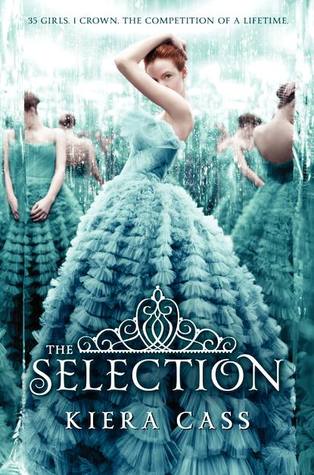
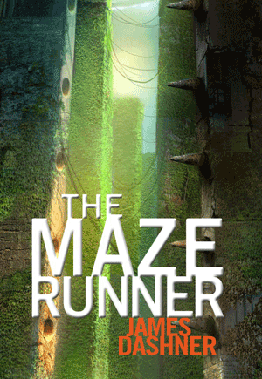
Dystopian future novels have gained quite a lot of popularity since the release of the first Hunger Games movie in 2012. I have long been a fan of these types of books and have read my fair share of them. While each one has its obvious differences, they all have, more or less, the same central idea; The future is a disaster full of destruction, hate, death, oppression, and survival. I started to notice these similarities between the different series and could even predict what was going to happen in one book, based off of others I had read.
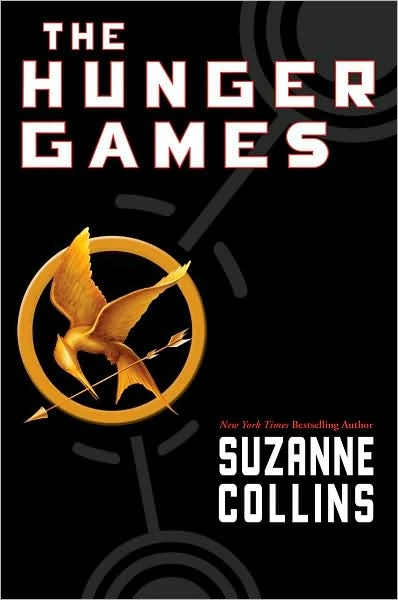 Most, if not all, dystopian future novels have an overly brave and gutsy teen protagonist. Their bravery (and stupid decisions) somehow allow them to save their collapsing society from the corrupted and oppressive government. I use the Hunger Games as an example because most people are familiar with the books, or at least have seen the movies. Katniss, the main protagonist, is only 17 years old while the series is taking place. Her actions destroy the Capitol and bring an end to a government that has ruled for over 75 years. That’s a pretty big deal for someone so young, and is also pretty unrealistic. However, there’s a reason Katniss was written to be this age. The Hunger Games, as well as many other dystopian future novels, are written for teens and young adults. Young characters are created as a way for readers to relate more closely to the stories and characters. Another convention of dystopian novels is a group of rebels that goes against authority and disregards the rules. These rebels act as allies to the main character and also give the readers a cause to support as they progress through the novel.
Many dystopian novels also touch on the concept of “Us” vs “Them”. They divide the population into groups in some way or another. Districts, factions, castes, call them what you will. Each is the same in principle and is used to show a hierarchy within the society. The whole point for writing a dystopian novel is to create a story that appeals to the target audience. I think the extreme portrayals of “Us” vs “Them” that is seen in many of these novels is appealing to readers because it is so unlike their daily life and it can be fun to imagine what living in a different world would be like. And finally, mixed in with all of the action, danger, and survival is a love story. A love story, could be a genre on its own, but it holds certain characteristic as a convention of dystopian future novels. Typically the 2 characters are thrown together under horrible circumstances. They must deal with the ups and downs of their relationship all while fighting for their life.
There are dozens of other conventions of dystopian future novels. Rebel forces, near death experiences, the death of important characters, and even that they get turned into movie franchises. Not every dystopian future novel contains every convention discussed, however some appear more often than others. The reason these certain characteristics are so frequently used is because they appeal to readers and allow them to connect more deeply with the story.
_by_Veronica_Roth_US_Hardcover_2011.jpg)
The Hunger Games
|
Diverget
|
The Maze Runner
|
The Selection
|
|
| Overly brave/gutsy teen protagonist |
X
|
X
|
X
|
X
|
| Destroyed or collapsed earth/society |
X
|
X
|
X
|
NO
|
| Division of population into separate groups (Us vs Them) |
X
|
X
|
~
|
X
|
| Rebel group |
X
|
X
|
X
|
X
|
| Love Interest |
X
|
X
|
X
|
X
|
| Near Death Experience |
X
|
X
|
X
|
X
|
| Death of important characters |
X
|
X
|
X
|
X
|
| Corrupted governmental figure |
X
|
X
|
X
|
~
|
| Survival |
X
|
X
|
X
|
X
|
| Resulting Movie Franchise |
X
|
X
|
X
|
NO
|
Subscribe to:
Posts (Atom)